

Accurate
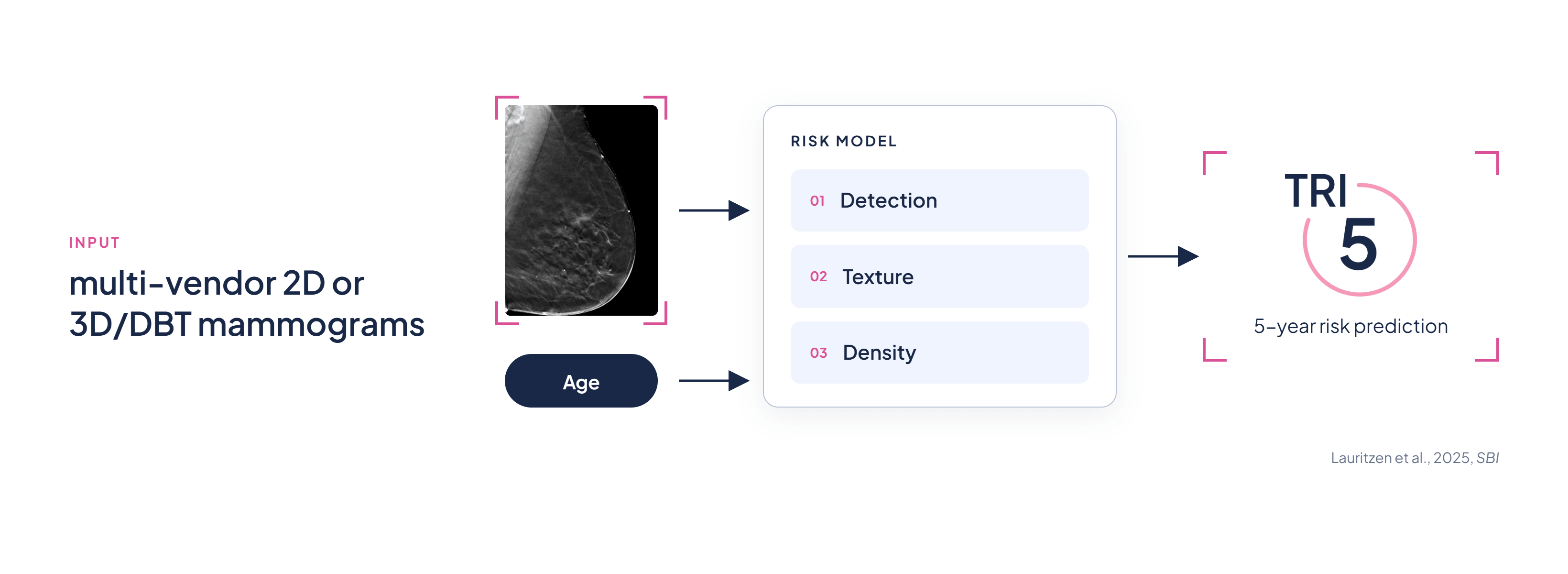
Highest AUC of four AI algorithms[iii] in predicting a woman's risk of developing breast cancer within a five-year period following a negative or benign exam.

Accessible
With millions of breast cancer screenings performed annually, woman aged 40-80 with a current, negative mammogram can benefit from TRI5 from her provider.

Actionable
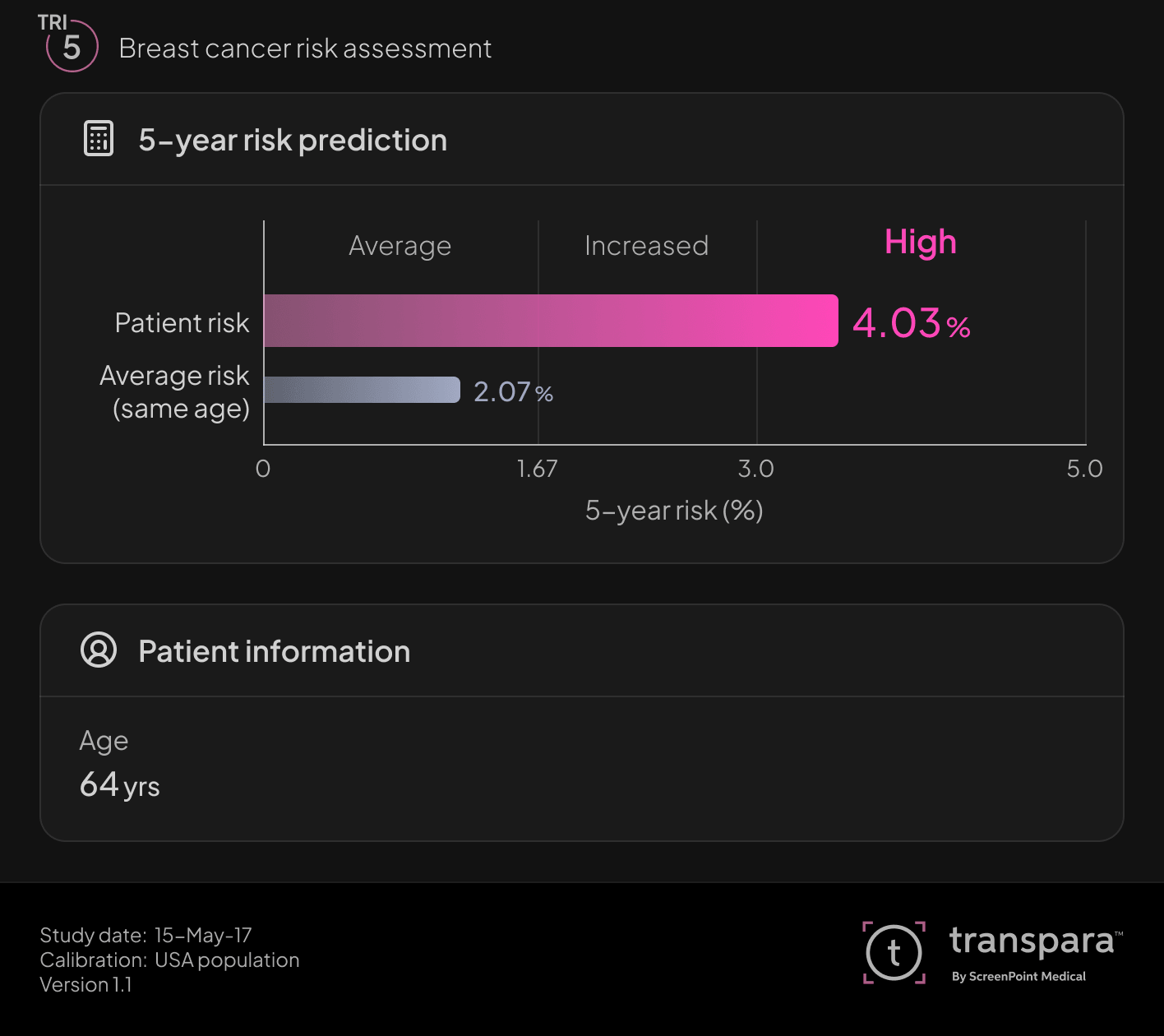
Identifying women at higher risk may support tailored screening or surveillance strategies, while optimizing interventions for women at lower risk.
Within the highest 10% of scores, TRI5 identifies on average 27% of future breast cancers developed or diagnosed within five years*
*Per Internal Evaluation and pending regulatory clearance. Exact values depend on cancer prevalence, screening interval, recall rate and modality.
Risk algorithms compared in UK screening populations
Retrospective Comparison - UK
Risk algorithms compared in UK screening populations
The top-ranking algorithm outperformed other solutions at five-year risk prediction. Within the highest 14% of risk scores, the top-ranking algorithm predicted 41.8% of all future cancers and 50.3% of interval cancers.[iii]
Read more in npj Digital Medicine
Assessing Breast Cancer Risk by Combining AI for Lesion Detection and Texture
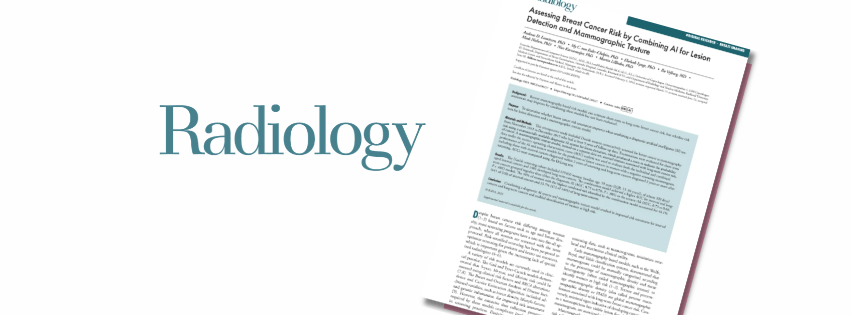 Read more in Radiology
Retrospective Study - Denmark
Assessing Breast Cancer Risk by Combining AI for Lesion Detection and Texture
"Combining a diagnostic AI system and mammographic texture model resulted in improved risk assessment for interval
cancers and long-term cancers and enabled identification of women at high risk."[iv]